The Run and Shoot Gets a Modern Twist
The Run and Shoot offense is more than just a scheme — it’s a four-wide flow state between quarterbacks and receivers. Born from the minds of visionaries like Mouse Davis and June Jones, it brought something radical to football: freedom in unison. Option routes. Four pass catchers. Run and shoot first, ask questions later.
But just as the Run and Shoot evolved, so did defenses. With smarter secondaries, exotic coverages, and the rise of the Air Raid and spread-option systems, the once-explosive offense faded from the spotlight and slipped into the underground.
That is, until now.
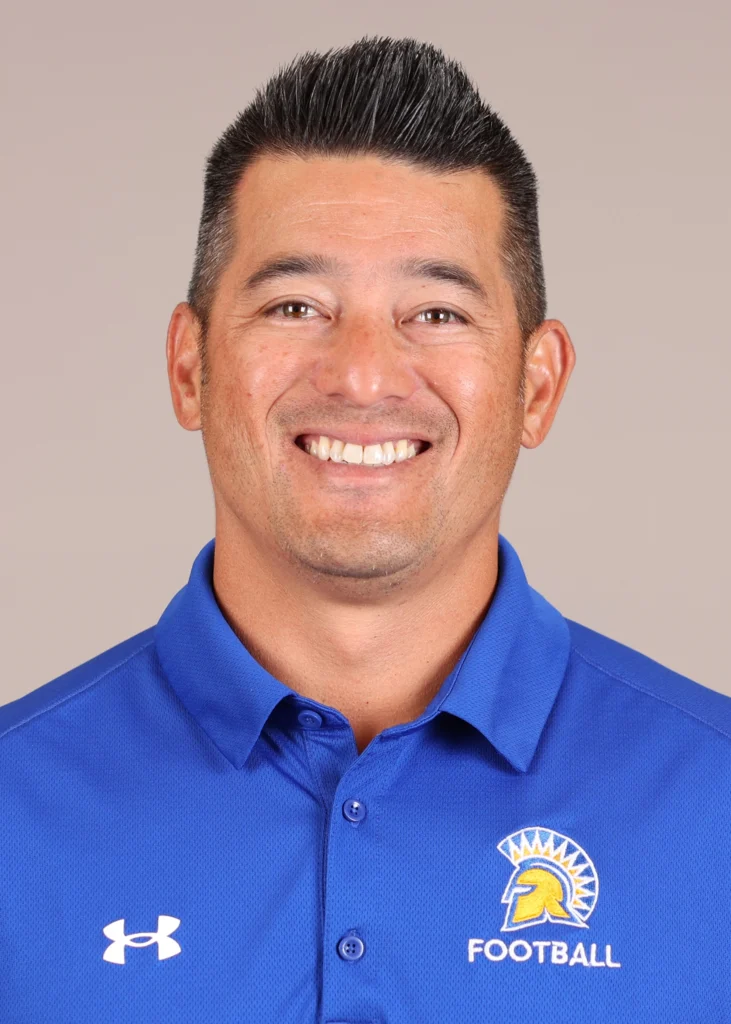
Enter Craig Stutzmann — San Jose State’s offensive coordinator and a former Run and Shoot star. What he’s building isn’t a throwback or a tribute. It’s a reimagining. A system forged and crafted for the modern game.
He calls it:
Spread and Shred.
Meet The Architect
Craig Stutzmann didn’t just study the Run and Shoot-he lived it. As a receiver at Hawaii under June Jones, he was intertwined in the system at its peak, lining up in the 4-wide infantry, making real-time reads, and excelling in the freedom that the offense presented. Those years shaped the way he saw the game and planted the seed for his coaching philosophy.
Through his early coaching stops as an assistant or GA, he coached in many offenses and learned about 11- and 12-personnel concepts he hadn’t been exposed to as a player. That’s when he asked himself, How can I use these concepts and personnel to enhance the Run and Shoot? That question became the foundation for what would grow into Spread and Shred.
Now, as the offensive coordinator at San Jose State, he finally has the keys to bring this vision to life – a system that honors the R&S DNA but thrives in the modern era.
Spread and Shred: Not a Reboot — a Reinvention
With a clear understanding of the traditional Run and Shoot’s weaknesses, Stutzmann set out to enhance the system — not fall into the stubborn good-ole-days nostalgia. He calls it Spread and Shred, and it’s exactly what it sounds like: take your coaching tree and put it in the wood chipper. Lol.
From his early coaching days, he kept asking himself: how can I take what 11- and 12-personnel teams are doing in the run game and RPO game, and attach it to the Run and Shoot philosophy — without losing what makes it special?
From there, he started experimenting:
• Pistol formations to give the QB diverse reads and create a downhill run game
• Occasional wide splits, borrowing from the “veer and shoot” style
• Tight ends in 11- and 12-personnel sets to open the run game and Red Zone
• More tempo to wear defenses down
• Explosive RPOs integrated with classic Run and Shoot reads
The result? A system that stresses defenses vertically and horizontally, keeps them honest, and punishes light boxes with downhill runs — while still keeping that signature R&S passing attack. Where the old-school Run and Shoot might run the ball 5–10 times a game, Spread and Shred adapts when it counts. Balanced, flexible, unpredictable.
This isn’t about nostalgia. It’s about taking a system that already works and making it feel like it was born for 2025.
Adapting to the Times: RPOs, Personnel, and Philosophy
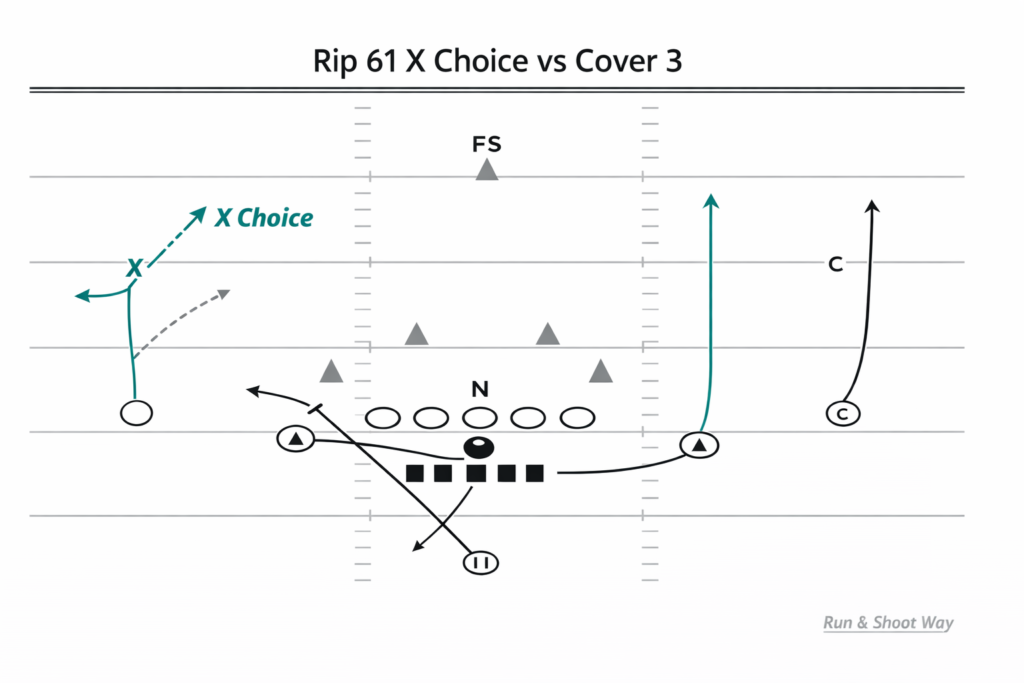
The Run and Shoot has always had one Achilles’ heel: a traditionally light run game and struggles in the Red Zone where the field shrinks. That run-game weakness wasn’t a problem when defenses were simple, but as quarters coverage, match schemes, and three-high safeties became the norm, those old reads got muddy fast. Suddenly, QBs and receivers couldn’t just look at the middle of the field and say open or closed. When the QB and receiver aren’t seeing the same picture, the whole polaroid gets lit on fire.
Stutzmann found answers without throwing a 200-slide clinic at you.
Here’s what stands out:
• Make defenses respect the run: Two-back sets, 11- or 12-personnel, and pistol formations bring a stronger downhill run game and better short-yardage efficiency
• Stretch the field both ways: RPOs with slot fades, shocks, and double moves keep defenses honest vertically, while horizontal options stress leverage
• Confuse match rules: Condensed and stacked receiver alignments with switch releases force defenders into tough coverage decisions
• Red Zone efficiency: Two-tight end looks plus the QB as a run threat create a plus-one advantage. Motion and shifts open lanes for screens and quick passes
• Balance with quick game: Short, efficient throws punish 2–3 high safety looks and complement the vertical attack, all while keeping classic R&S reads intact
At its core, Stutzmann’s philosophy stays true to the Run and Shoot DNA: read, adjust, attack. The difference is it’s tuned for modern defenses — faster, more flexible, and less rigid — without losing the explosive edge that made the offense legendary.
Run and Shoot, Upgraded
At its core, it’s still Run and Shoot DNA — just with a modern upgrade. Think of it like an iPhone upgrade: same core design, way more features, and it doesn’t freeze when defenses throw something weird at it.